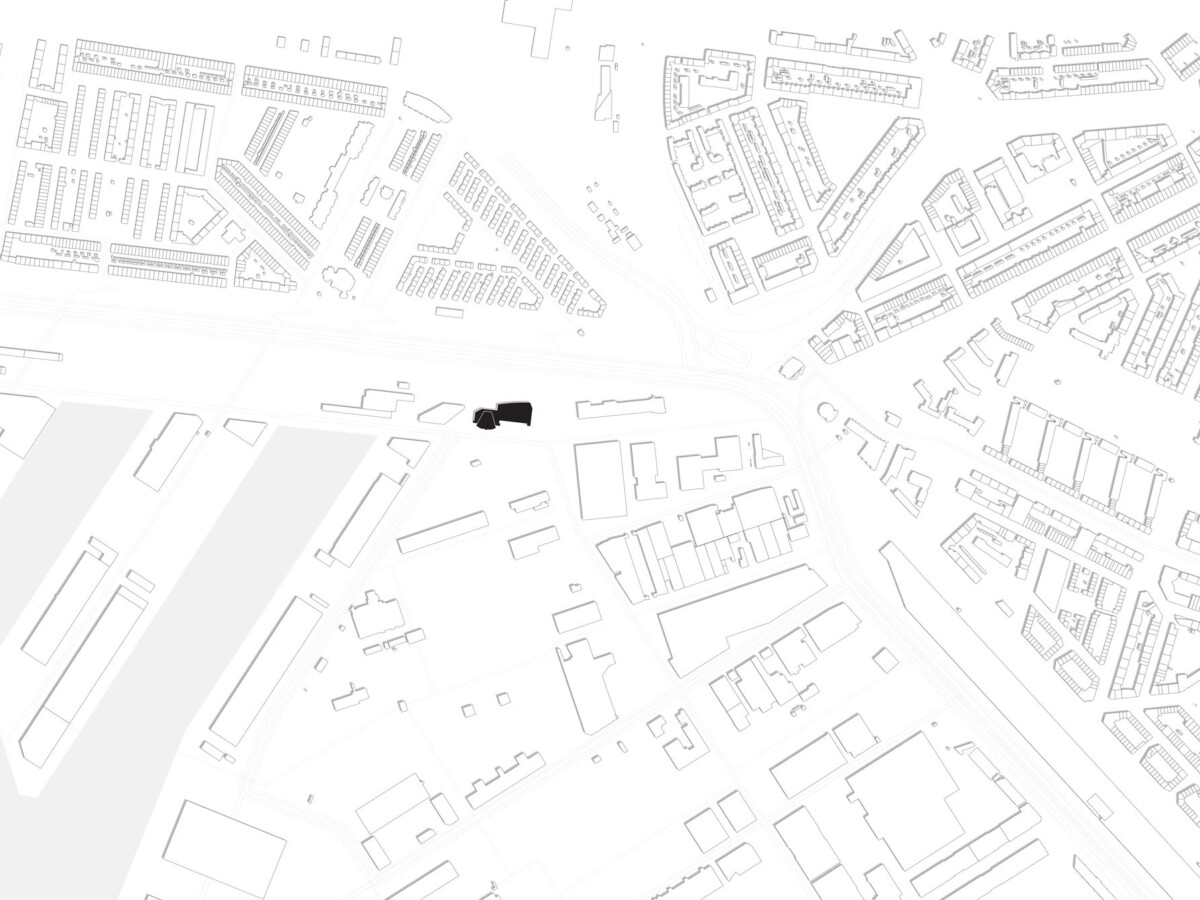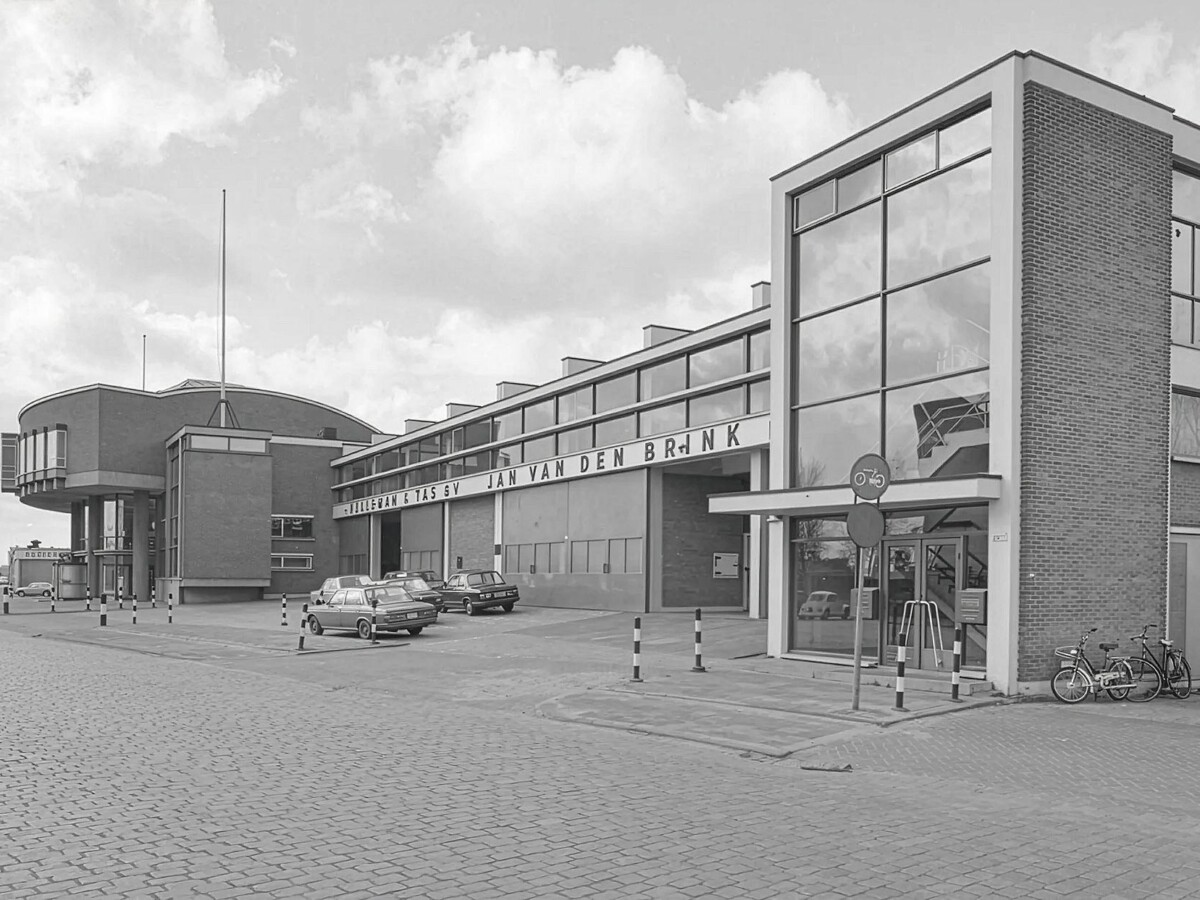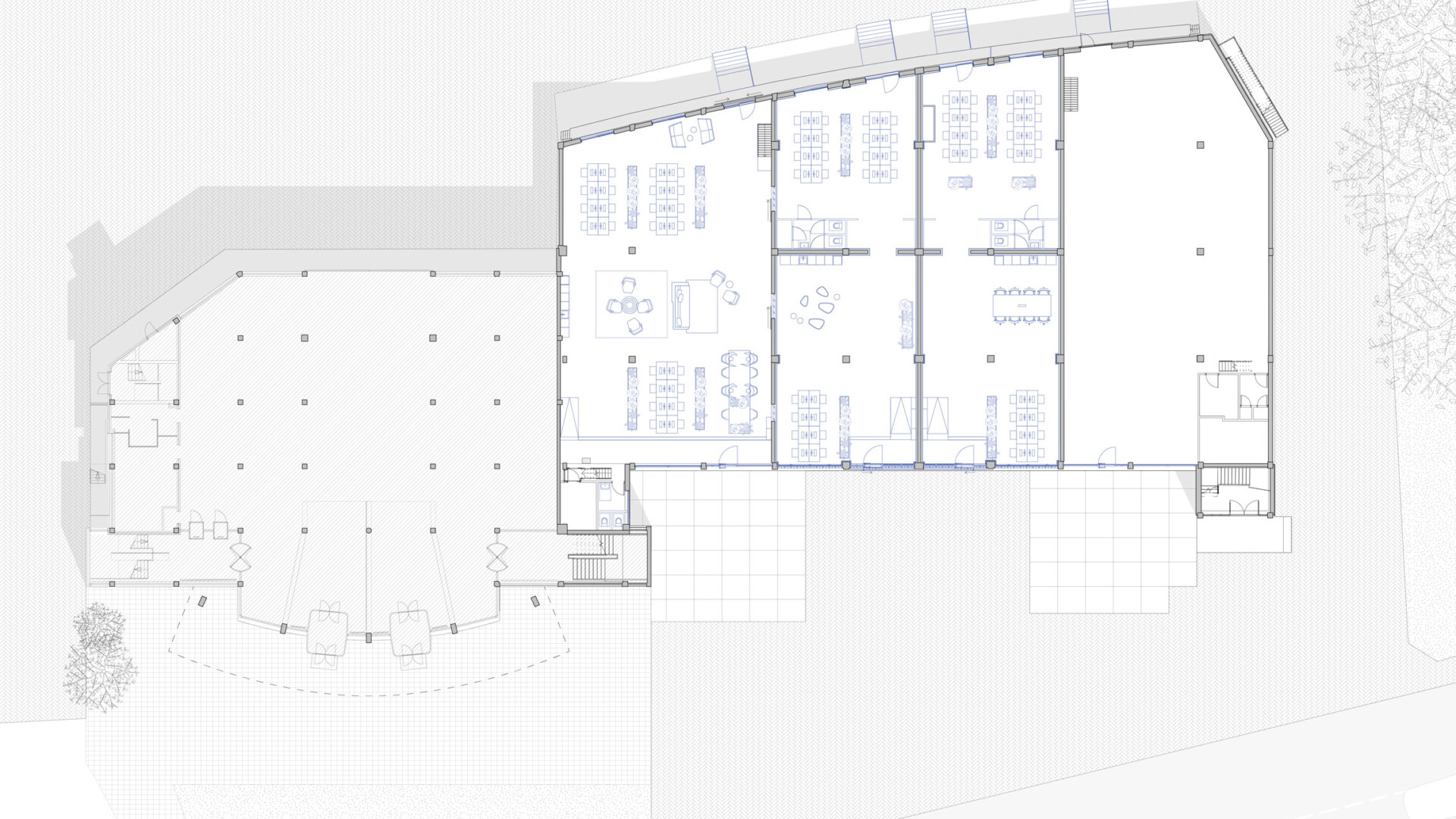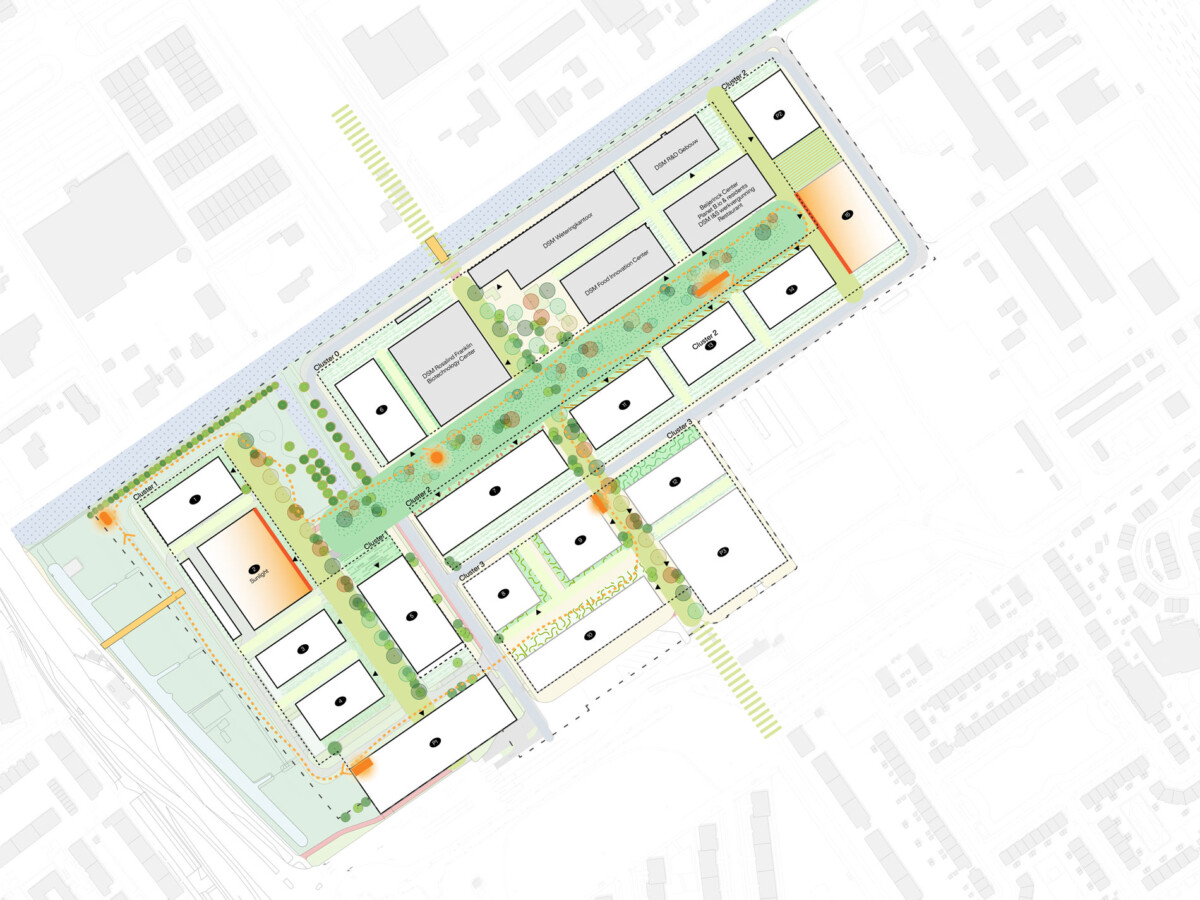
The historic Citrusveiling in Rotterdam’s Merwe-Vierhavens (M4H), originally designed by Hugh Maaskant and Bert van Dommelen between 1951 and 1955, is entering a new phase of life as the Citrus Club. Once a key node in the city’s fruit trade, the monumental complex is now being transformed into a place for makers, start-ups and creative entrepreneurs
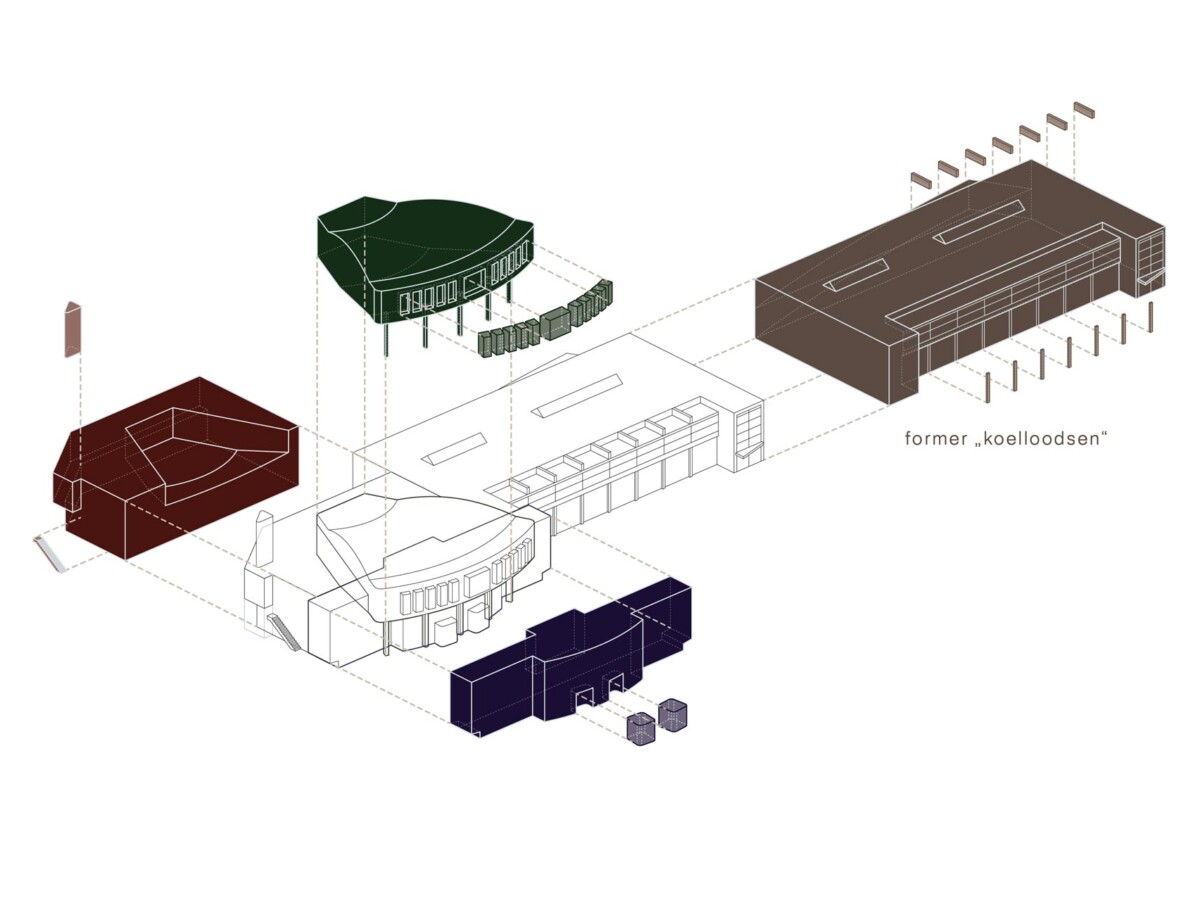
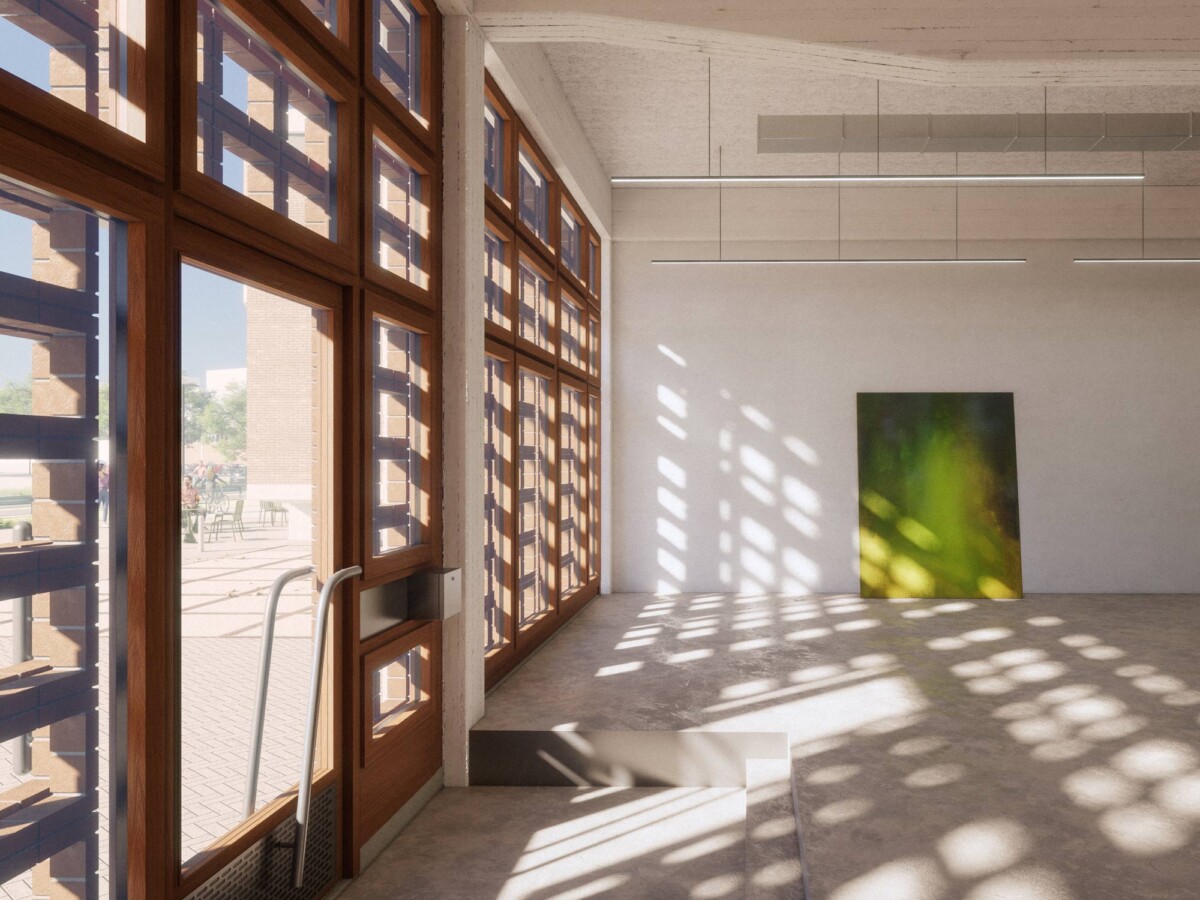
Our approach departs from a close reading of Maaskant’s architectural language: the interplay of open and closed volumes, robust materiality and a clear structural logic. The former koelloodsen (cold storage warehouses) — deep, introverted spaces with a strong industrial character — are reimagined as light-filled work environments while preserving their original spatial qualities. The challenge was to introduce daylight and openness without disrupting the rhythm and composition of the historic façade.
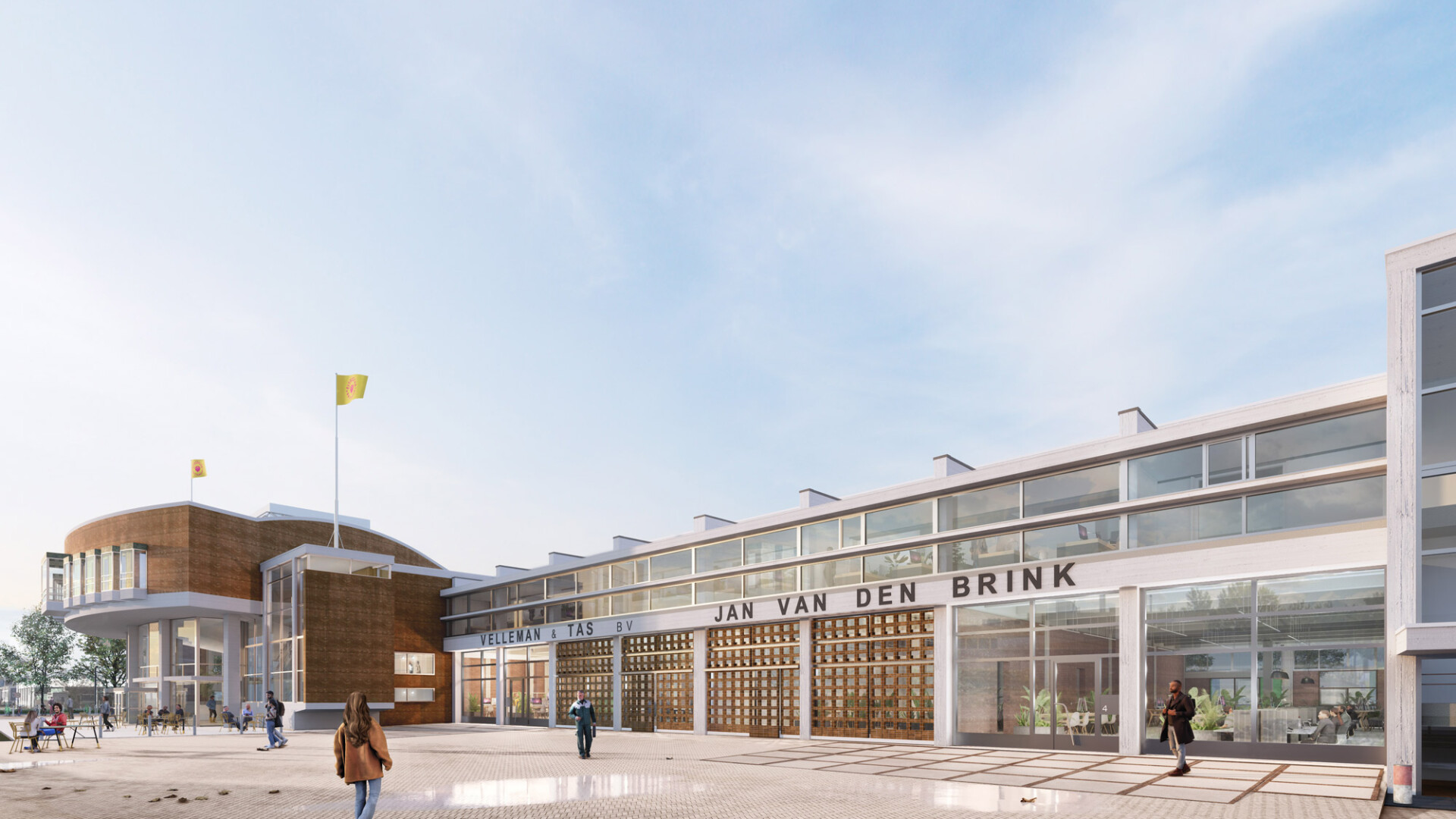
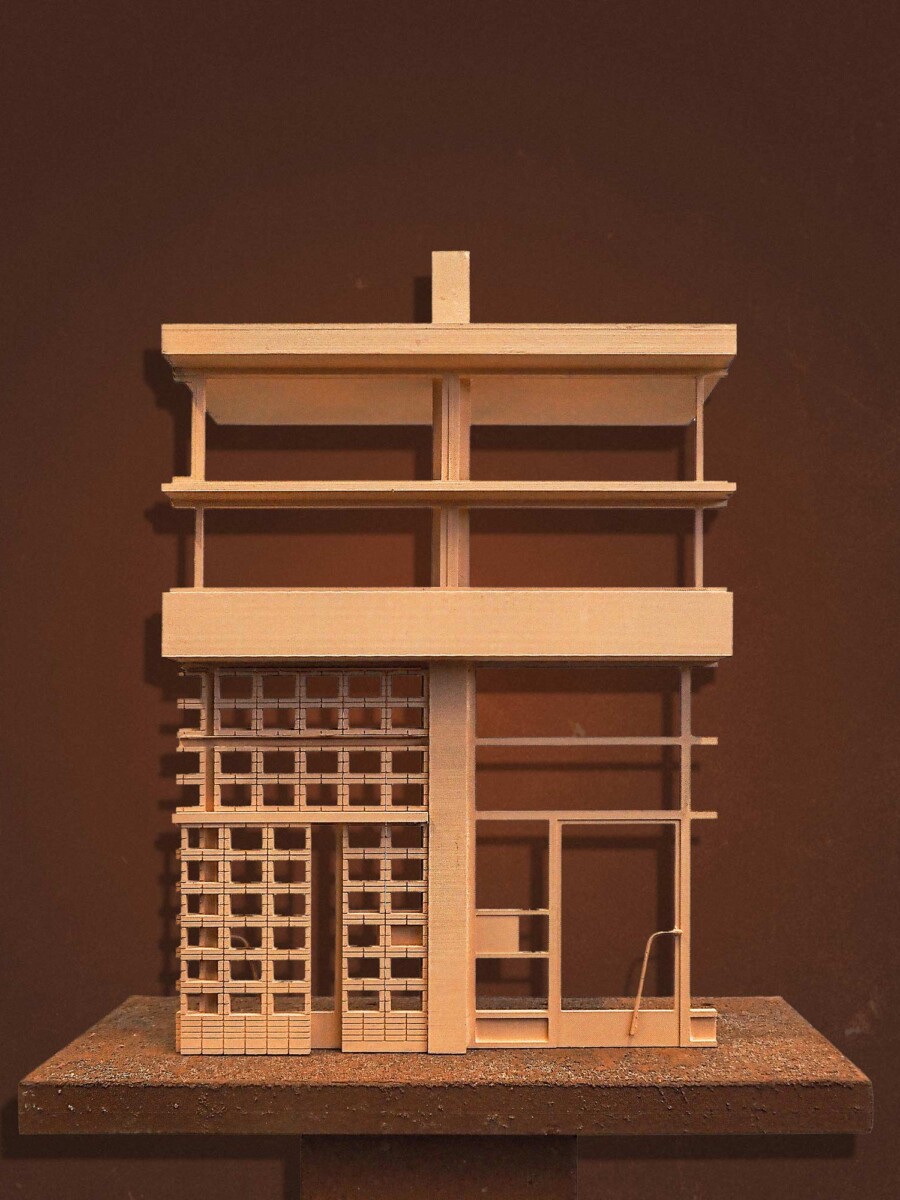
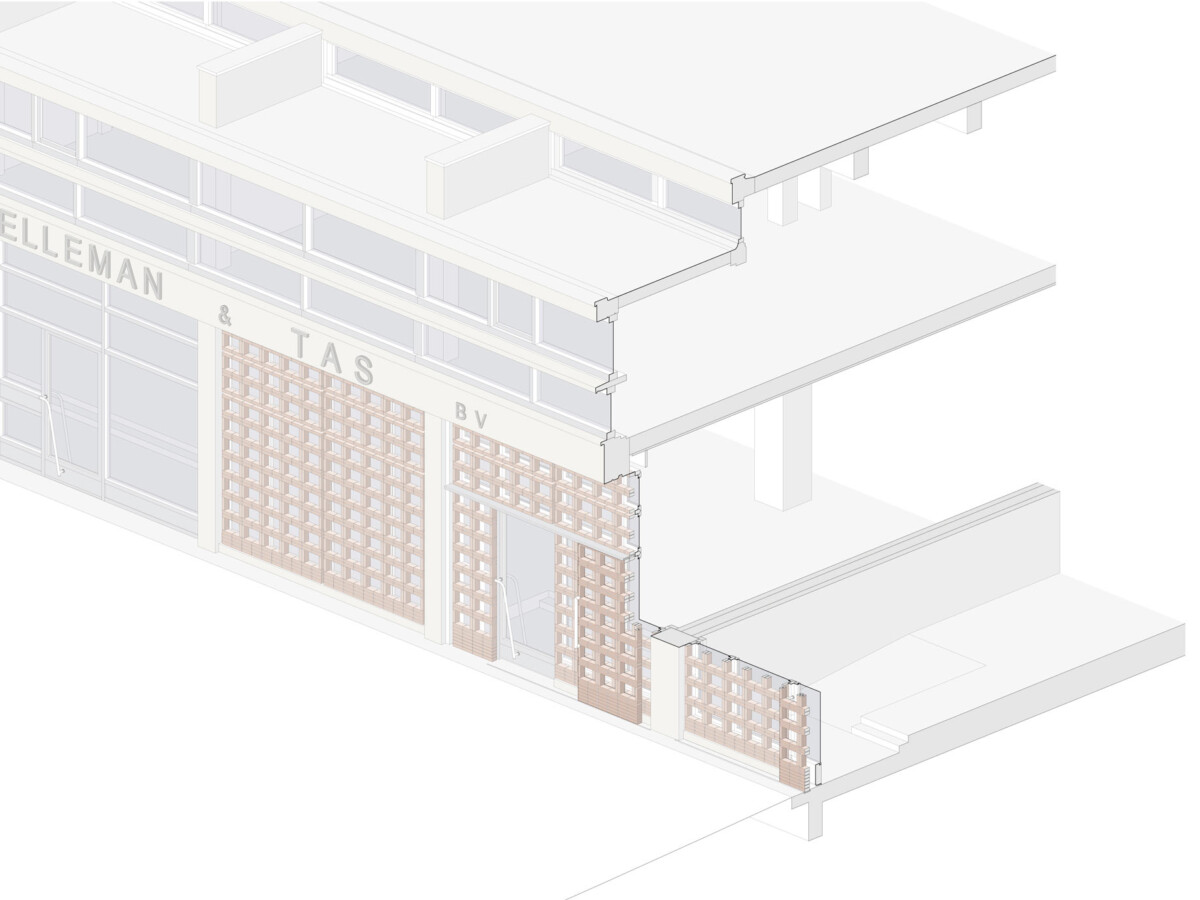
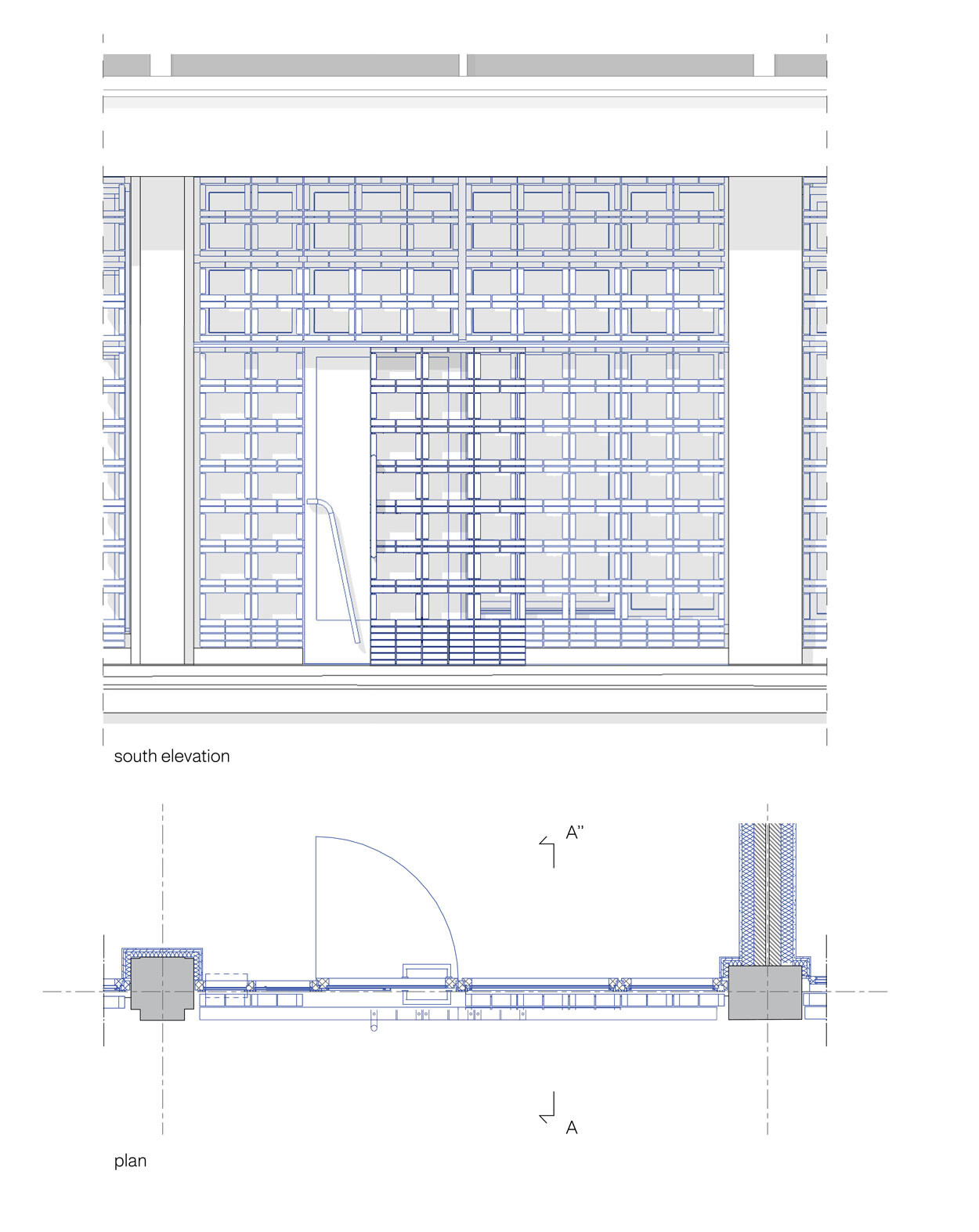
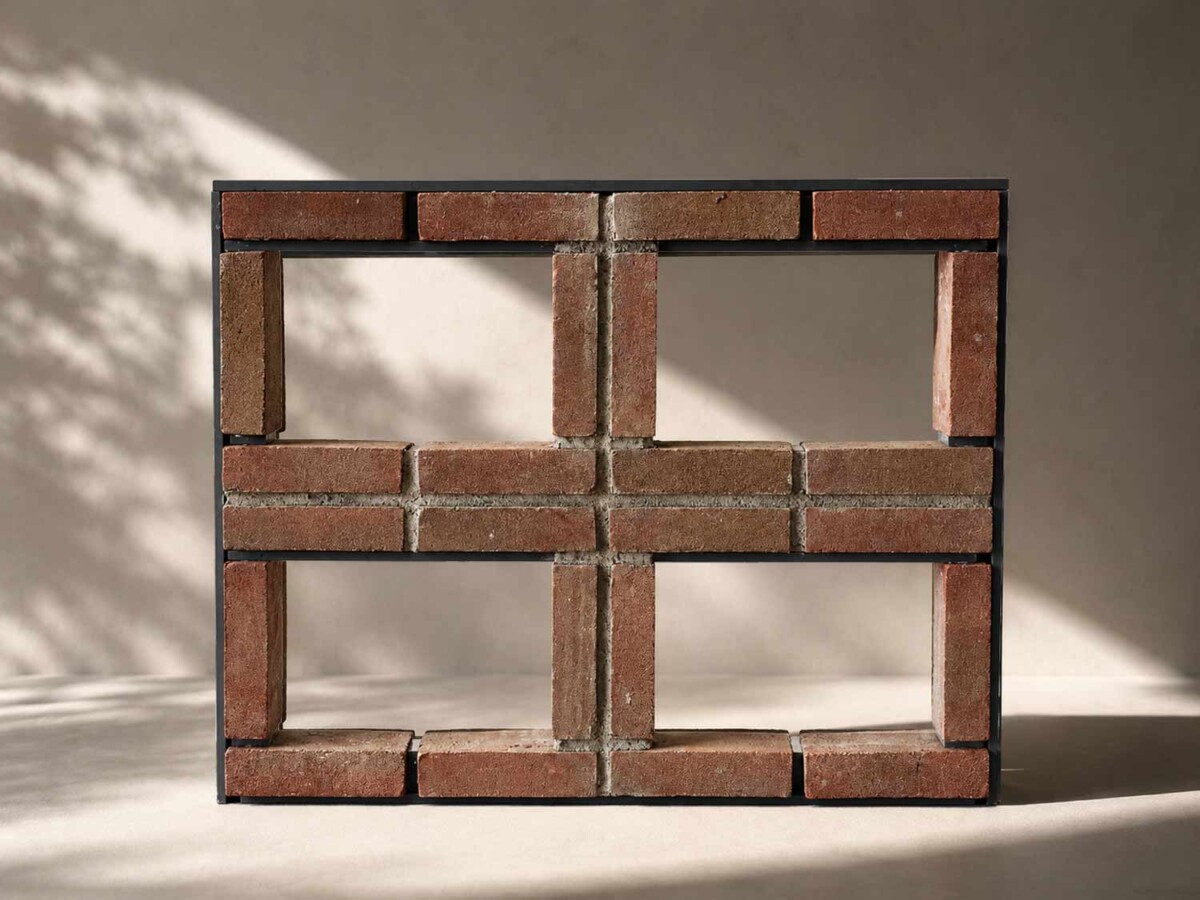
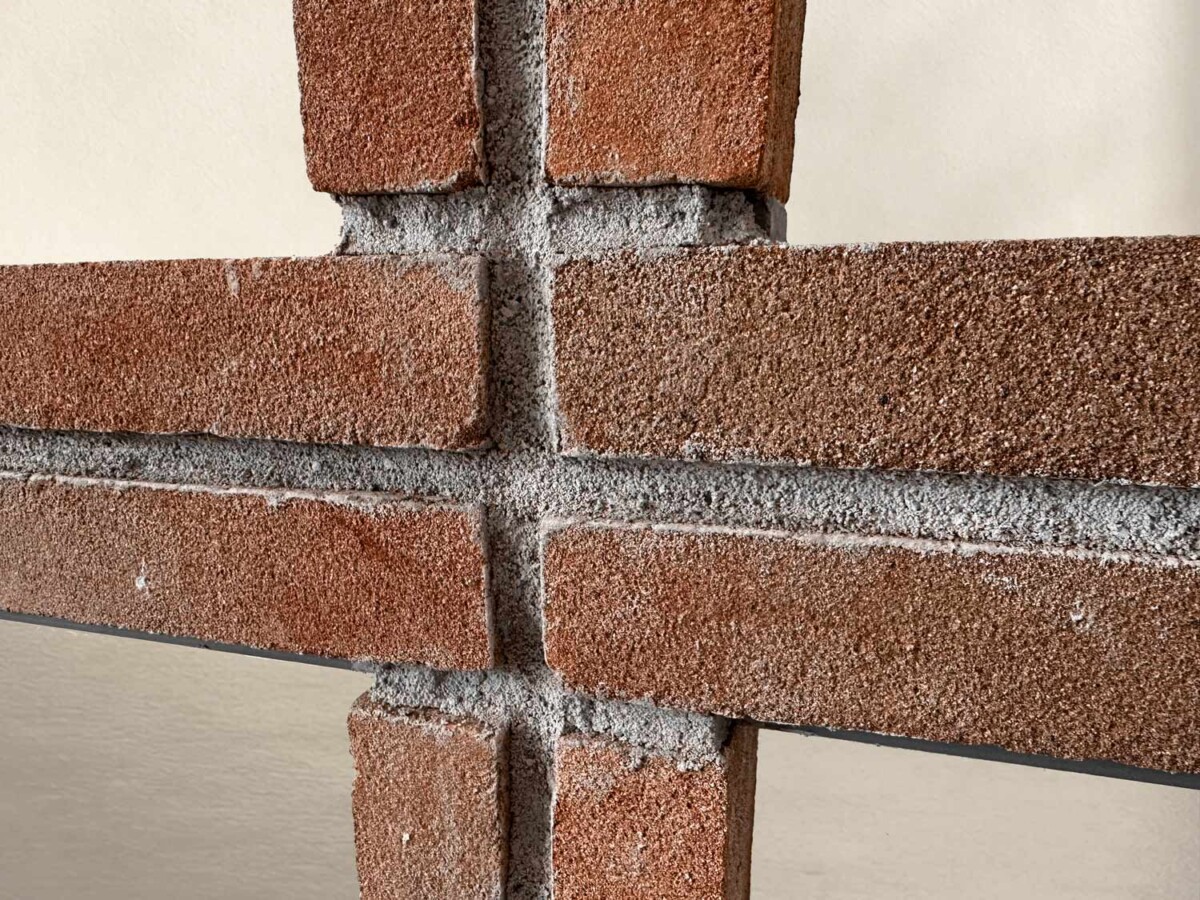
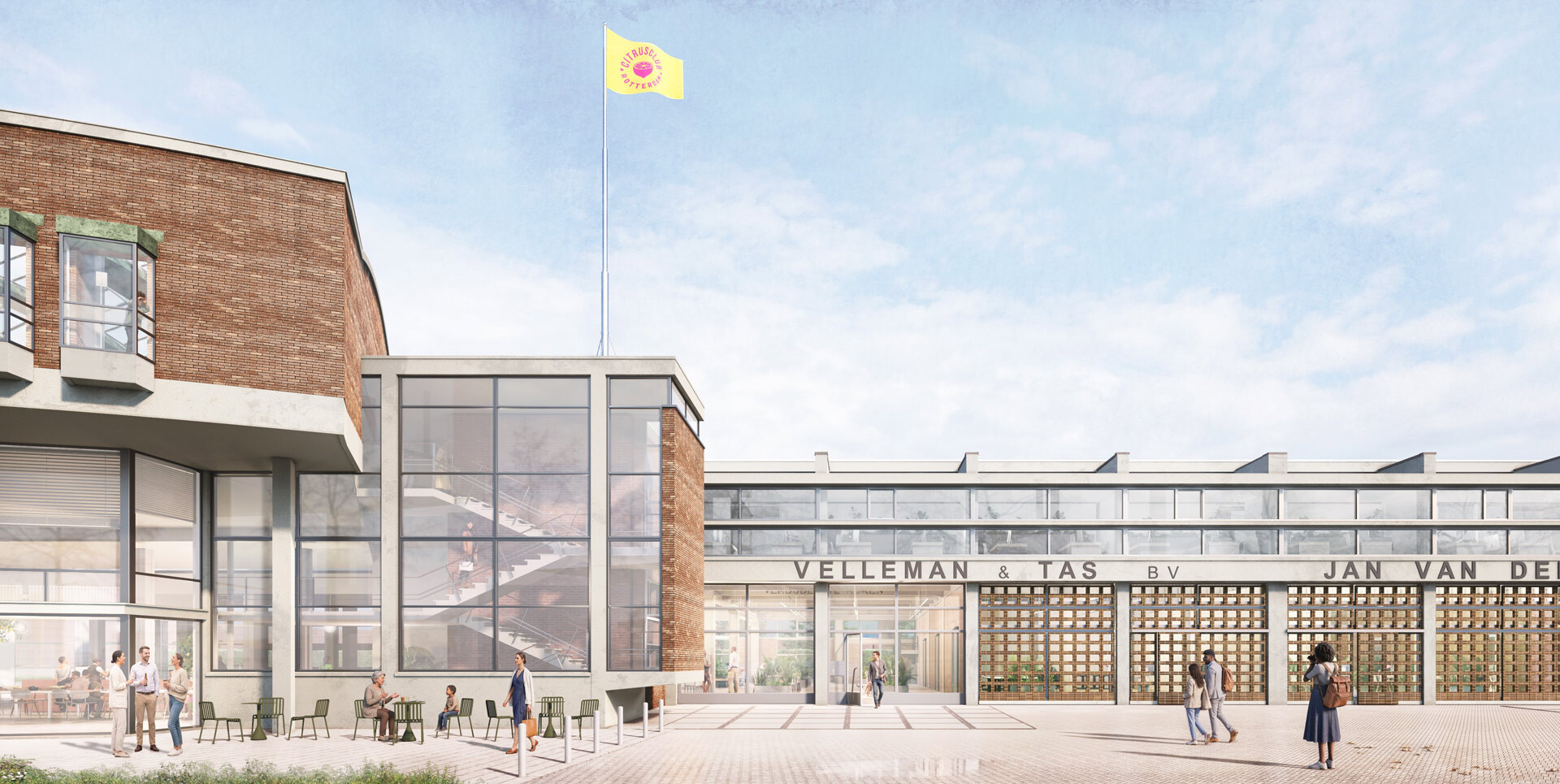
Along the southern façade, reclaimed bricks from the existing building are reassembled into an open masonry structure that brings daylight deep into the interior while simultaneously providing natural sun shading. The former loading bays on either side are transformed into open elements that reveal the new use of the building and align with the horizontal articulation of the upper level. In this way, the façade gains depth and permeability, without losing its characteristic order.
Inside, the existing concrete structure and brick walls remain clearly legible and form the basis for a simple and functional working environment. The spatial atmosphere reflects the rational and pragmatic spirit of Maaskant’s original design, while offering contemporary spaces for collaboration and production. This first step of the transformation sets the foundation for a broader development in which the Citrus Club will grow into a lively hub for work, culture and public programmes. Rooted in its industrial past and oriented towards new forms of making, the Citrusveiling is reactivated as a meaningful place for both its users and the surrounding district.